

- Published on
AI Crypto Portfolio Management: Benefits, Risks, and Strategies That Actually Matter
Listen to the full article:
- Authors

- Name
- Jagadish V Gaikwad

Stop pretending this is just about “smarter investing”
Your crypto portfolio is already living in a 24/7 casino. The difference is whether you are staying awake for every swing or letting AI crypto portfolio management handle the noise.
That sounds clean. It’s not. The real game is deciding where automation helps and where it quietly makes your life more dangerous.
AI crypto portfolio management uses algorithms, machine learning, and rule-based automation to monitor assets, rebalance positions, flag risk, and sometimes execute trades without constant human babysitting. The pitch is obvious: less emotion, faster reactions, and better structure in a market that loves chaos.
The catch is just as obvious once you’ve lived through a drawdown. Automation doesn’t remove market risk, and it definitely doesn’t remove bad strategy design.
Why people are obsessed with it
Look, crypto moves too fast for human attention to keep up. AI helps because it can scan more data, react faster, and keep your portfolio from turning into a random pile of coins you bought because Twitter yelled at you.
The biggest win is discipline. Automated crypto portfolio management can rebalance consistently, track positions around the clock, and reduce emotional decisions like panic selling or revenge buying.
That matters more than people admit. Most bad crypto decisions aren’t intellectual failures, they’re mood swings with a wallet attached.
AI also makes it easier to manage multiple strategy sleeves at once. You can separate long-term holdings, trading capital, and higher-risk bets instead of mixing everything into one giant mess.
The benefits are real, but they’re not magic
Honestly? This is where people get sloppy. They hear “AI” and assume the portfolio will just get better on its own.
Here’s what AI crypto portfolio management can do well:
- 24/7 monitoring catches moves while you’re asleep.
- Faster execution helps when markets spike or dump hard.
- More disciplined rebalancing keeps your allocation from drifting into nonsense.
- Better risk visibility surfaces volatility, concentration, and exposure problems earlier.
- Less emotional trading cuts the self-sabotage that wrecks so many retail portfolios.
That’s the upside. It’s boring in the best way. Good AI portfolio systems don’t try to be genius traders every minute; they keep you from doing stupid stuff at scale.
There’s another angle people miss. AI can help identify fraud, manipulation, and suspicious market behavior, which is especially useful in exchange and portfolio-control settings. In crypto, where bad data and weird market structure are part of the deal, that’s not a tiny benefit.
The risks are where the real money gets burned
Here’s the thing nobody wants to say out loud: AI crypto portfolio management can fail cleanly and still destroy you.
The biggest risk is poor strategy design. If your rules are dumb, the automation just makes dumb decisions faster.
Then you’ve got over-automation. That’s when you stop paying attention because the dashboard looks fancy and the charts feel scientific. Spoiler: a polished interface doesn’t protect you from bad assumptions.
Liquidity is another trap. A model can look brilliant in backtests and then choke the second it tries to move size in a thin market. Crypto loves to punish anything that assumes every token trades like Bitcoin.
Platform and custody risk also matter. If your tooling depends on exchange APIs, smart contracts, or third-party custody, you’re not just betting on the market. You’re betting on infrastructure too.
And yes, AI can create false confidence. If a system looks “smart” for a few months, people start trusting it way too much. That’s usually right before the crash gets expensive.
Strategy beats hype every time
The trap most teams fall into is trying to automate everything on day one. That’s how you get burned and then blame the tool instead of the rollout.
Start with a narrow setup. Bitradex’s guidance is blunt: begin with tracking and alerts, then add rebalancing suggestions, then automate only small, clearly defined rules, and only later allocate a limited slice to bot-based strategies.
That sequence is smart because it gives you visibility before you give up control. It also forces you to prove the system works in your environment instead of in some fantasy backtest.
If you’re building a real AI crypto portfolio management process, this is the order that makes sense:
- Define your goals and risk tolerance.
- Pick the assets or sleeves that can actually be automated.
- Set the rules for rebalancing, alerts, and position sizing.
- Test with a small capital slice.
- Review outcomes before scaling anything.
That last step is where most people fail. They test for a week, get excited, and then hand over the whole portfolio like it’s a magic trick.
What good AI setup actually looks like
Real talk: a good setup is boring, specific, and hard to abuse.
You want clear allocation targets, explicit stop conditions, and permissions that don’t let a bot move money you didn’t mean to expose. If you’re connecting wallets or exchanges, trading-only API permissions are the minimum sane setup.
You also want transparent logic. The better systems explain why they changed allocation or flagged risk, because black-box behavior is a problem when money is involved. If your risk officer, partner, or even you can’t understand the action, you’ve got a trust problem.
Here’s a simple comparison of approaches:
| Approach | What it feels like | Best for | Catch | Real Talk |
|---|---|---|---|---|
| Manual management | You make every move yourself | Small portfolios, high conviction, learning | Emotional mistakes, slow reaction, burnout | Fine if you trade lightly and stay disciplined |
| Rule-based automation | Simple if-this-then-that behavior | Rebalancing, alerts, basic execution | Doesn’t adapt much to weird market conditions | Best starting point for most people |
| AI-assisted management | Models suggest actions, you approve them | Investors who want help without full handoff | Can still overfit or misread market context | The sweet spot for most serious operators |
| Fully autonomous systems | The system makes the calls | Advanced users, narrow strategies, controlled environments | Highest risk if controls are weak | Cool in theory, dangerous if you’re careless |
If you’re asking which one I’d pick, I’d take AI-assisted management first. It gives you speed without surrendering your brain.
The risk controls you actually need
Okay so the catch is this: AI crypto portfolio management only works if you build guardrails like a paranoid adult.
First, cap the size of any automated sleeve. You do not want your whole net worth riding on a model that had a nice month.
Second, monitor drift, slippage, and liquidity conditions. A strategy that looks good on paper can bleed quietly in live markets if execution costs are bad.
Third, set human review triggers for anything outside the expected range. If volatility spikes, if the model changes behavior, or if correlations break, you want a manual checkpoint.
Fourth, don’t confuse automation with diversification. A lot of so-called diversified crypto portfolios are just ten versions of the same risk in different wrappers.
And fifth, assume every system can be hacked, broken, or fooled. That’s not paranoia. That’s just crypto.
Where AI can actually help you make more money
Here’s the part everyone wants and nobody likes earning: AI can improve returns indirectly by keeping you from trashing the portfolio.
It helps you rebalance more consistently. It helps you stop chasing pumps and selling lows out of fear. It helps you hold a process when the market is screaming at you to panic.
That’s why the most useful AI crypto portfolio management setups often don’t look sexy. They’re not chasing moonshots every hour. They’re reducing mistakes, tightening execution, and keeping your portfolio aligned with your actual plan.
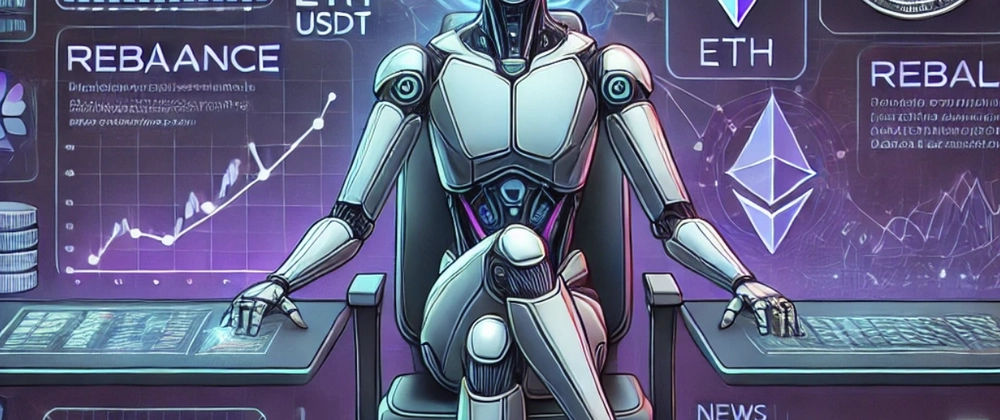
If you want a concrete example, think about a trader running BTC, ETH, and a few alt sleeves. Without automation, they drift into oversized alt exposure because the winners keep running, then they get wrecked when liquidity vanishes.
With AI-assisted rebalancing, that drift gets corrected before it becomes a disaster. That’s not glamorous. It’s just better.
The biggest mistake is trusting the model more than the market
Honestly, this is the whole mess in one sentence.
AI can process more data than you can, faster than you can, and more consistently than you can. But crypto isn’t only a data problem. It’s also a reflexive, manipulated, and sometimes absurd market.
That means models can be fooled by bad data, overfitting, sudden regime shifts, or adversarial behavior. A strategy that worked in one market cycle can fall apart the second conditions change.
So the smartest move isn’t blind faith. It’s layered control.
Use AI for monitoring, alerts, and decision support first. Move into limited automation only after the system proves itself. Keep humans in the loop for capital allocation, exceptions, and risk review.
That’s the difference between an actual strategy and a very expensive experiment.
Who AI crypto portfolio management is for
Look, this isn’t for everyone.
If you’re casually holding a few coins and checking prices once a week, you don’t need a complex system. You probably need simpler rules and fewer buttons to press.
If you’re managing multiple assets, trading sleeves, or strategies across different exchanges and wallets, AI crypto portfolio management starts to make a lot more sense. It’s especially useful if your biggest weakness is inconsistency, not lack of information.
It’s also a solid fit for operators who care about process. If you want better allocation discipline, faster risk checks, and less emotional junk in your decisions, this is worth a serious look.
What to do next if you’re building this now
Real talk: don’t start with the flashiest model you can find.
Start with a boring portfolio map. Decide what should be tracked, what should be rebalanced, and what should never be touched without review. Then test a tiny slice and watch how it behaves across calm and ugly markets.
If the system can’t explain itself, don’t trust it. If it can’t survive liquidity stress, don’t size it up. If it only looks good in backtests, treat it like a demo, not a decision engine.
That’s how you keep AI crypto portfolio management useful instead of reckless. And yeah, that boring discipline is the whole point.
What’s your biggest blocker right now: bad tooling, bad process, or just not trusting a model with real money?
You may also like
- IFA 2025: The Rise of AI-Powered Laptops and Handhelds Revolutionizing Mobile Computing
- Image Recognition SaaS APIs: Unlock AI Advantages for Your Apps in 2025
- Best AI Crypto Trading Platforms in 2026: What to Look For Before You Start
- Best AI Trading Tools for Crypto Traders: Features, Costs, and Risks in 2026
- Cloud Hosting for AI-Generated Content Platforms: The Ultimate 2025 Guide