

- Published on
AI for Crypto Futures Trading: Strategies, Risks, and Limitations
Listen to the full article:
- Authors

- Name
- Jagadish V Gaikwad
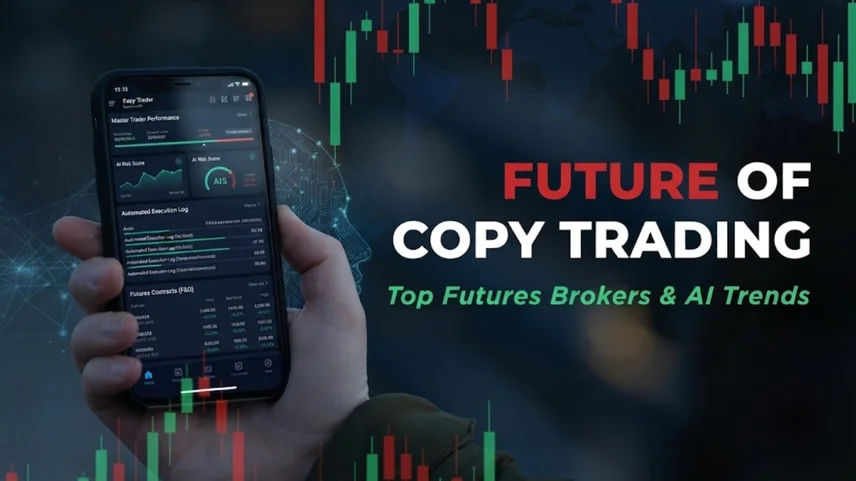
Why everybody’s suddenly obsessed with AI for Crypto Futures Trading
Stop pretending this is just a trend. Your competitors are already using AI for Crypto Futures Trading to scan funding rates, sentiment, volatility, and order book pressure while you’re still squinting at five charts like it’s 2021. Tools in the market now claim they can read RSI, MACD, Bollinger Bands, VWAP, sentiment, order book depth, and funding rates in one pass, which tells you exactly where this space is headed.
The basic pitch is simple. AI for Crypto Futures Trading can help automate long and short decisions on futures contracts, react faster than a human, and keep you from making emotional mistakes when the market starts acting feral. That part is real, and it’s why retail traders, quants, and small funds keep showing up here.
But the hype is doing what hype always does. It’s making people think AI is a replacement for judgment, when it’s really a very fast assistant that can also make very expensive mistakes.

What AI actually does in crypto futures
Here’s the thing, most people overcomplicate this. In practice, AI for Crypto Futures Trading usually does one of four jobs: find setups, filter noise, size positions, or automate execution.
That can mean a bot watching momentum and mean reversion signals, a model tracking funding rate imbalances, or a system using NLP to scan headlines and social chatter for sentiment shifts. Some tools also watch liquidation heatmaps, basis spreads, or volatility regime changes so they can decide whether the market is trending, chopping, or about to do something stupid.
A lot of platforms package this as “AI trading,” but the engine underneath is often a mix of traditional indicators and rule-based logic. The AI part is usually the decision layer, not some mystical oracle.
The strategies that actually matter
Real talk: the best AI for Crypto Futures Trading strategies are boring in the best way. They focus on repeatable edges, not moonshot predictions.
A strong setup usually starts with one of these approaches:
- Trend-following: buy strength, short weakness, and let the model filter false breakouts
- Mean reversion: fade extremes when price stretches too far from the norm
- Market-neutral or delta-neutral: use funding or basis gaps without needing a huge directional call
- Momentum confirmation: stack indicators like RSI, volume, and order flow to avoid garbage entries
- Sentiment-aware trading: let AI digest news and social data before the crowd finishes reacting
The smartest setups combine signals instead of worshipping one indicator. I’d rather trust a model that checks funding, volatility, and structure than a bot that screams “buy” because RSI dipped for five minutes.
A practical framework that doesn’t suck
Honestly? This is where people mess up. They jump straight into leverage, automation, and full-size capital before proving the model works in the first place.
A sane workflow looks like this:
- Start with one strategy and one timeframe.
- Paper trade it for at least four weeks.
- Give it strict entry, exit, and position sizing rules.
- Move to tiny live size only after the paper results don’t fall apart.
- Track drawdown, win rate, slippage, and liquidation risk every week
That’s not sexy. It’s also the difference between a system and a gambling habit.
If you want a concrete example, think about a BTC futures bot that uses RSI divergence, volume profile, and funding rate monitoring. That setup isn’t trying to predict the future. It’s trying to catch moments when the crowd is leaning too hard one way, then step in only when the trade structure makes sense.
AI for Crypto Futures Trading vs. manual trading
| Approach | What it feels like in real life | Where it wins | Where it hurts | Real talk |
|---|---|---|---|---|
| Manual trading | You stare at charts and second-guess every candle | Flexibility and intuition | Emotional mistakes and missed entries | Good for discretion, bad for consistency |
| AI-assisted trading | The model flags setups and you approve them | Faster scanning and cleaner filtering | Still needs human oversight | Best middle ground for most traders |
| Fully automated trading | The bot trades while you sleep | Speed and discipline | One bad bug can wreck you | Only worth it if your rules are tight |
| Hybrid AI for Crypto Futures Trading | AI generates signals, you control risk and capital | Balance between speed and control | More moving parts | This is the version I’d trust first |
The catch is simple. The more automation you add, the more your mistakes scale. A dumb manual trade loses once. A bad bot can lose all week before you notice.
The real risks nobody wants to talk about
Yeah, this part matters more than the strategy. Futures already carry leverage, liquidation risk, and funding costs. Add AI, and now you’ve got model risk on top of market risk.
Here’s what can go wrong fast:
- Overfitting: your model looks genius in backtests and falls apart live
- Bad data: if the inputs are wrong, the outputs are garbage
- Regime shifts: a trend strategy can die the second the market turns choppy
- Latency and slippage: your perfect entry becomes a worse fill
- Over-leverage: higher leverage makes small model errors lethal
- False confidence: the bot trades with conviction even when the setup is weak
A lot of traders blame the AI when the real problem is their own risk settings. If you size too big, use sloppy stops, or ignore drawdown limits, AI just helps you lose faster.
Why risk management is the whole game
Look, AI for Crypto Futures Trading is useless if your risk rules are trash. The best systems in this space still use clear stop-loss levels, conservative position sizing, and drawdown caps.
That means you need to know how much you’re risking before you enter. A common starting point is risking a small fraction of capital per trade, then tightening exposure when volatility spikes or the system starts missing. Some traders also cap leverage at moderate levels because liquidation risk gets ugly fast once you start pushing size.
This is where a lot of “AI alpha” dies. The model might be decent, but if you let it trade like it’s immortal, you’re done.
Where AI is genuinely useful
Here’s the thing nobody says loudly enough: AI is great at grunt work. It’s excellent at scanning huge piles of market data, spotting setup clusters, and reacting faster than you can when the market is moving like a drunk knife fight.
In crypto futures, that means AI can help with:
- Monitoring funding rates across exchanges
- Tracking spot-versus-perps spreads
- Detecting volatility shifts before they’re obvious
- Reading sentiment from news and social feeds
- Watching order book depth and liquidity pockets
That’s useful. Very useful. But notice what it’s not doing: it’s not removing uncertainty. It’s making uncertainty easier to manage.
Where the limitations hit hard
Honestly, this is the part that gets buried under the marketing. AI for Crypto Futures Trading has hard limits, and they’re not small.
First, models are only as good as the market conditions they’ve seen. Crypto changes fast, and a setup that worked in one cycle can die in the next because volatility, liquidity, and crowd behavior shift. Second, AI can’t reliably reason about black swan events, exchange outages, regulatory shocks, or the kind of news that nukes a market in minutes.
Third, many bots are just pattern machines with fancy branding. They can detect signals, but they don’t understand whether the market is actually tradable, whether spreads are wide, or whether a signal is already crowded. That’s a huge difference.
And finally, execution matters. A brilliant signal with bad fills is still a bad trade.
When AI helps and when it doesn’t
The trap most teams fall into is thinking AI should make every decision. It shouldn’t. It should help with repeatable analysis, trade filtering, and risk control, while you handle context and capital allocation.
If you’re trading BTC futures with a simple thesis, AI can help you validate the setup faster. If you’re trying to predict every move in a chaotic altcoin market, you’re basically asking a calculator to become a prophet. That’s not how this works.
The best use case is hybrid. AI handles scanning and alerting, then you decide whether the setup deserves money.
A blunt take on tools and bots
Yeah, I know, another AI tool. But some of them are actually useful if you understand what they’re built for.
Some products focus on automated long/short futures trading across major crypto pairs and mix technical indicators with sentiment and order book data. Others are more about execution, NLP-based trade actions, or pre-emptive stop-loss tracking. There are also strategy frameworks built around trend-following, mean reversion, and market-neutral logic, which is honestly the kind of structure you want if you’re serious.
| Tool type | Best for | Weak spot | My take |
|---|---|---|---|
| Signal generator | Finding setups fast | Still needs human judgment | Great first step |
| Full auto bot | Hands-off execution | Dangerous if rules are sloppy | Only for disciplined traders |
| Monitoring system | Funding, basis, and liquidation alerts | Doesn’t trade for you | Underrated and practical |
| Hybrid AI stack | Signals plus manual approval | More setup work | This is the sweet spot |
If I had to pick one, I’d take the hybrid setup. It gives you speed without handing the wheel to software that doesn’t care if your account survives.
So, should you use AI for Crypto Futures Trading?
Real talk: yes, but only if you’re willing to do the unsexy work. AI for Crypto Futures Trading is strongest when it narrows your focus, enforces your rules, and stops you from trading every random wiggle on the chart.
It’s weak when you expect it to print money, adapt instantly to every regime, or save you from bad sizing. That’s fantasy. The real edge is tighter process, faster scanning, and less emotional damage.
If you build around that, you’ve got something useful. If you don’t, you’ve just built a faster way to lose.
What’s your bigger problem right now: finding better entries, or keeping your risk under control?
You may also like
- How to Optimize Cloud Costs for AI-Driven SaaS Apps in 2025
- How AI Is Revolutionizing Enterprise Data Hosting in 2025
- Crypto Wallet Security: How AI Is Improving Fraud Detection
- Thank You Ronaldo Portugal Out of World Cup: A Farewell to the 2026 Final Chapter
- Data-Driven Decision Making with SaaS AI Tools: Unlock Smarter Strategies