

- Published on
AI Trading Algorithms Explained: From Data to Execution
Listen to the full article:
- Authors

- Name
- Jagadish V Gaikwad
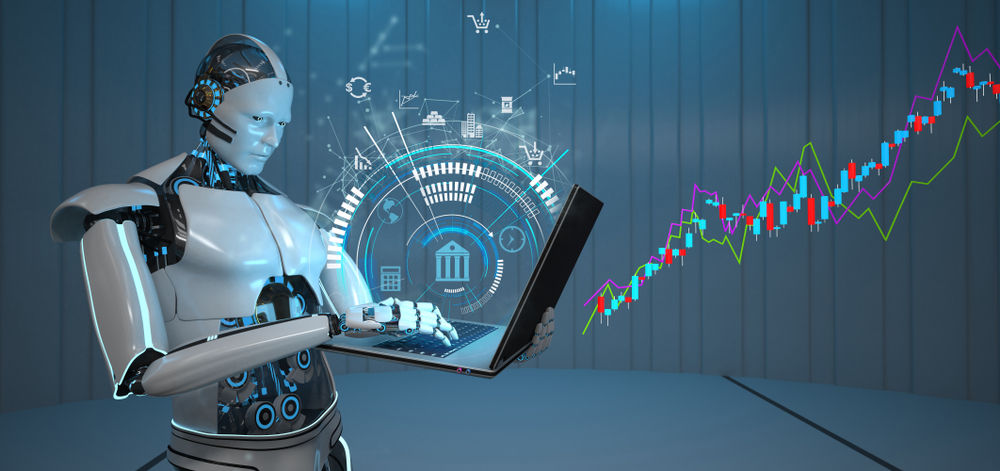
Stop romanticizing AI trading
Your trading bot doesn’t care about your opinions. It cares about data, latency, and whether your backtest is lying to your face.
That’s the whole game with AI trading algorithms. They’re not a futuristic black box. They’re a system that learns from market data, turns that into signals, and fires orders through a broker when the setup is there.
What AI trading algorithms actually do
Look, here’s the simple version. AI trading algorithms ingest data, find patterns, predict something useful, and then execute trades automatically.
That sounds clean. It’s not clean in practice. The model can be brilliant and still lose money if your data is trash, your slippage is ignored, or your execution is slow.
Data is the whole ballgame
Real talk: if your data sucks, your model is theater.
AI trading lives or dies on inputs like historical prices, volume, order-book depth, fundamentals, macro releases, news, and even social sentiment. Some setups also use alternative data like satellite images or shipping flows, which sounds wild until you realize markets pay for any edge they can get.
The annoying part is that raw data is useless by itself. The system needs features, which are transformations like returns, volatility, spreads, anomalies, and sentiment scores that the model can actually learn from.
Here’s the thing: most beginners want to jump straight to a model. That’s backwards. You should obsess over tick-level quality, fees, and slippage first, because those three things can erase a strategy that looks gorgeous in a notebook.
From raw data to usable features
Honestly? This is where people mess up.
You don’t feed a trading model a pile of prices and pray. You build features that describe market behavior: moving averages, RSI, MACD, ATR, volatility clusters, order-flow imbalance, and text-derived sentiment scores. The trick is making sure the features reflect the market reality you’re actually trying to trade.
A tiny feature set is usually better than a bloated one. One guide on AI trading says to keep features under ten until the basics work, which is boring advice and exactly why it’s useful.
The main model types
Yeah, I know, everybody wants to say “AI” and pretend that covers everything. It doesn’t.
Different model families do different jobs in AI trading algorithms. Supervised learning predicts outcomes like next-day direction or volatility. Unsupervised learning clusters regimes or spots anomalies. Reinforcement learning learns a policy by chasing rewards in simulated trading environments.
| Approach | What it’s good at | Catch | Best use case |
|---|---|---|---|
| Supervised learning | Predicting price direction, returns, or volatility | Easy to overfit noisy markets | Signal generation |
| Unsupervised learning | Finding regimes, clusters, anomalies | Doesn’t directly tell you when to buy | Market regime detection |
| Reinforcement learning | Learning trading or execution behavior through reward feedback | Can get weird fast if the reward is badly designed | Execution and policy optimization |
| Rule-based algo + ML layer | Combining hard rules with pattern detection | Less sexy, usually more practical | Most real-world trading stacks |
If you want the honest take, the hybrid setup is usually the least stupid option. Pure AI sounds cool. Pure rules are safer. Mixing both gives you something that can adapt without going feral.
Backtesting is where dreams go to die
The trap most teams fall into is thinking a winning backtest means they found edge. It usually just means they found a bug.
Backtesting has to include fees, slippage, and realistic execution assumptions, or you’re building fiction. Good systems are stress-tested across different market regimes so you can see whether the edge survives calm markets, chaos, and the ugly middle where most strategies get wrecked.

You also need to watch for overfitting, because markets are noisy and models love to memorize nonsense. If your strategy only works on one narrow slice of history, it’s not a strategy. It’s a coincidence with a dashboard.
A solid test usually checks more than one metric. Annualized return matters, but so do max drawdown, turnover, capacity, and what happens when you raise costs by 25% to 50%. That last one stings for a reason.
Strategy design: what the model is actually trying to do
Here’s what nobody talks about: the model doesn’t “understand” markets. It just maps inputs to outputs with whatever math you trained it on.
In practice, AI trading algorithms are usually built around a hypothesis. Example: price tends to keep moving after a certain momentum trigger, or mean-revert after a volatility spike, or react to a sentiment shock in a predictable way. Once the hypothesis is clear, you can decide whether the model should predict direction, size, timing, or just whether a trade is worth taking.
That matters because not every strategy needs a genius brain. Sometimes you just need a model to say “yes” or “no” with decent timing. That’s a lot more useful than asking it to predict the future like a psychic with a GPU.
Execution is where good models still lose
Stop pretending this is only about prediction. If execution is broken, your model is a very expensive suggestion engine.
Live systems turn signals into order size, route trades through broker APIs, and manage risk in real time. For high-frequency setups, milliseconds matter. For normal setups, bad routing still hurts, just more quietly.
The catch is that execution quality can destroy a good edge. A strategy that looks profitable in backtest can collapse the second it meets spreads, partial fills, and market impact. That’s why smart execution logic matters as much as the model itself.
Risk controls are not optional
Look, this is where amateurs get smoked.
A signal alone is not a trade. The system still needs position sizing, exposure limits, stop logic, and daily loss caps. If you skip that part, one bad regime can take a good idea and turn it into a funeral.
Risk controls also help with model drift. Markets change. Your model will drift. That’s normal. What’s not normal is letting a stale model keep firing after its edge has died.
AI trading vs traditional algo trading
Real talk: people mash these together and act like they’re the same thing.
Traditional algo trading follows predefined rules. AI trading uses models that learn from data and can adjust as new data arrives. One is more rigid. The other is more adaptive. Neither one is magic.
AI trading is better when the market pattern is messy, non-linear, or constantly changing. Rule-based systems are better when the logic is simple, transparent, and you actually want to know why the trade happened. If you’re running capital, that explainability isn’t a bonus. It’s survival.
A sane workflow from data to execution
Here’s the thing: the process is boring, but boring works.
Start with a clear hypothesis. Pull clean historical and live data. Build a small feature set. Train the model. Backtest it with realistic costs. Stress test it. Then send signals into a live execution layer with hard risk limits and monitoring.
That pipeline sounds basic because it is. The hard part is not knowing the steps. The hard part is not lying to yourself while doing them.
Why most AI trading projects fail
Honestly? Because teams want the upside without the discipline.
They buy noisy data. They overfit the model. They ignore slippage. They don’t monitor drift. Then they blame “the market” when the thing blows up. The market didn’t betray them. Their process did.
Another common failure is scale. A model can look amazing on a small account and fall apart once size starts moving prices or hitting liquidity limits. That’s why capacity matters. If your strategy can’t survive real size, it’s not ready.
What actually works in the real world
Here’s what nobody wants to hear: simple often wins.
The best AI trading algorithms usually don’t try to predict every tick. They focus on one clean edge, use a limited set of features, keep risk tight, and monitor the live-vs-backtest gap constantly. That’s not glamorous. It’s just profitable when done right.
I’ve seen teams get seduced by fancy neural nets and reinforcement learning setups, only to discover that a simpler model with better data and tighter execution made more money. Yeah, that’s annoying. It’s also the truth.
Final reality check
AI trading isn’t a shortcut. It’s a machine that turns good process into faster decision-making, and bad process into faster losses.
If you treat AI trading algorithms like a black-box lottery ticket, you’re going to get wrecked. If you treat them like a disciplined pipeline from data to execution, they can be seriously powerful.
What’s the part you’re actually stuck on right now: data quality, backtesting, or getting the execution layer to behave?
You may also like
- How AI is Changing the Future of DevOps in Cloud Computing
- How AI Is Creating New Business Opportunities in 2026
- How AI Detects Market Trends and Trading Opportunities in 2026
- Best AI Video Generation Tools for SaaS Marketing Teams in 2025
- AI-Driven Business Intelligence Platforms Redefining Analytics in 2026