

- Published on
AI Trading vs Algorithmic Trading: What’s the Difference in 2026?
Listen to the full article:
- Authors

- Name
- Jagadish V Gaikwad
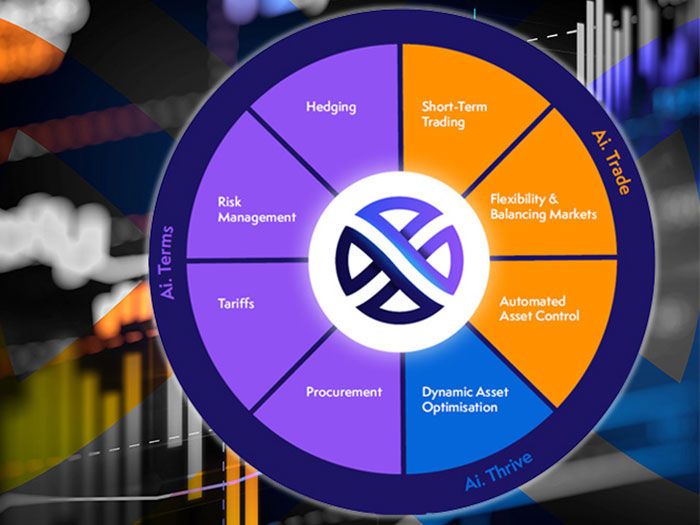
Stop pretending they’re the same. Your competitors are already using AI to adapt to market shifts while you’re stuck tweaking if/then rules that break when volatility spikes. The difference isn’t just technical—it’s strategic. AI trading reasons through data; algorithmic trading executes fixed instructions. One evolves, the other stagnates.
Real talk: most traders mix these up because both automate trades. But if you’re building a strategy for 2026’s chaotic markets, knowing which one you need is non-negotiable. Let’s cut the noise.
The Core Difference: Rules vs. Reasoning
Algorithmic trading is rule-based. It’s a rigid script: “If price crosses 50-day EMA, buy. If RSI > 70, sell.” The rules are written by humans, frozen in code, and never change unless you manually update them . It’s like a reliable assistant who follows your checklist perfectly—but can’t think outside it.
AI trading is reasoning-based. It doesn’t just follow rules; it analyzes the current state, weighs inputs, and decides what to do. The decision might look similar to yesterday’s, but it’s not identical—it adapts . Think of it as a research analyst who learns from every trade, spotting patterns humans miss.
“Algorithmic trading executes a fixed set of rules. AI trading executes a reasoning process.”
The key? Algo trading is a broad category. AI trading is a subset where decisions come from adaptive models (machine learning, deep learning, LLMs) instead of static rules . All AI trading is algorithmic—but not all algorithmic trading is AI.

How Each System Actually Works
Algorithmic Trading: The Precision Machine
Traditional algo trading uses fixed, hand-coded rules to generate signals. Example: “Buy when 20-period EMA crosses above 50-period EMA and RSI < 60. Sell when price closes below 20-period EMA” . These rules are explicit, interpretable, and never change based on market data .
It’s designed for rapid execution. Algo bots can process hundreds of trades in seconds, navigating markets with remarkable speed . Ideal for minimizing slippage, managing costs, or sticking to a disciplined strategy where consistency is king .
But here’s the catch: the system can’t learn on its own. You must feed it instructions constantly. If market conditions shift (e.g., a new regulation, a pandemic), your algo breaks until you manually fix it . Plus, you rely on your judgment when creating rules—creating space for human error .
AI Trading: The Self-Evolving Analyst
AI trading uses data-driven models that learn patterns from historical data instead of being explicitly programmed . Instead of a human saying “buy when EMA crosses,” a machine learning model examines thousands of past examples and discovers which feature combinations predict price moves .
It continuously evaluates gigabytes of structured and unstructured data—news, social sentiment, order flow—to uncover subtle correlations or pricing inefficiencies . AI adapts to changing conditions proactively, updating its algorithms automatically .
“AI possesses the capability to analyze extensive volumes of both structured and unstructured data, uncovering patterns that human traders or basic rule-based systems might overlook.”
The trade-off? These patterns are often less interpretable and more prone to overfitting . You might not know why AI made a trade—it just did. That’s the “black box” problem .
Control, Flexibility, and Human Intervention
Who’s Holding the Reins?
In algorithmic trading, you maintain control. You set the parameters, adapt strategies when markets shift, and tweak rules as needed . It’s automation with human analysis. You’re the pilot; the algo is just the autopilot.
With AI trading, you relinquish control. AI develops its own patterns autonomously . When it’s at the helm, its responses to unforeseen events remain uncertain. It might execute a trade with no clarity on why .
“The primary distinction between algorithmic and AI trading lies in the degree of control.”
Flexibility in Fluctuating Markets
Algo trading excels in stable, predictable conditions where rules work consistently. But in volatile, evolving markets? It’s rigid. AI trading is more flexible when markets fluctuate because it learns from data and adapts dynamically .
Experts say: if speed and discipline matter more than adaptability, choose algo trading. If you need to navigate complexity by processing massive datasets and adapting to new patterns, AI wins .
Speed, Efficiency, and Real-World Performance
Both automate trades faster than humans. But AI takes automation to a whole new level .
| Aspect | Algorithmic Trading | AI Trading |
|---|---|---|
| Decision Logic | Fixed if/then rules | Adaptive reasoning from data |
| Human Control | High—you set rules | Low—AI learns autonomously |
| Market Adaptability | Low—breaks in volatility | High—learns and adjusts |
| Speed | Ultra-fast execution | Fast, but focuses on analysis |
| Interpretability | High—rules are clear | Low—“black box” decisions |
| Human Error | High—depends on your coding | Low—learns from data |
| Maintenance Cost | High—manual updates needed | Lower—auto-updates algorithms |
Real talk: AI models facilitate smarter strategy development, while algorithms ensure rapid execution . Many professional systems combine both: AI for signal generation, algo for execution .
But here’s the warning: algos built using AI often disappoint in real-time performance . AI doesn’t know what’ll work in the future. Real-time performance is where the gap between AI and human-based algos is widest .
When to Use Each (And Why Most Teams Mix Them)
Choose Algorithmic Trading If:
- You need consistent, rule-based execution
- Speed and discipline are critical (e.g., high-frequency trading)
- Your strategy is simple and predictable (e.g., moving-average crossovers)
- You want full control and transparency over every trade
Choose AI Trading If:
- Markets are complex and evolving
- You need to process massive datasets (news, sentiment, order flow)
- Your strategy requires adaptability to new patterns
- You’re willing to accept less interpretability for better performance
The Hybrid Reality
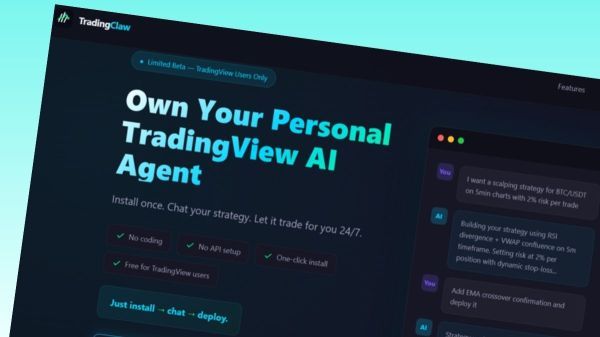
Most professional traders don’t pick one. They use AI to generate signals (finding opportunities) and algo to execute them (fast, disciplined trades) . This combo gives you smarter strategies and reliable execution.
“Experts assert there’s no definitive victor. The choice depends on individual goals. Both coexist in most professional environments today.”
The Risks Nobody Talks About
AI’s Black Box Problem
You might not understand why AI made a trade. It develops patterns autonomously, and its reasoning is opaque . In a crisis, that uncertainty can be dangerous.
Algo’s Rigidity Trap
Your rules work until they don’t. When markets shift (e.g., a new regulation, a crash), your algo breaks. You’re stuck manually updating code while losing money .
Overfitting in AI
AI models can discover patterns that look great on historical data but fail in real-time . They’re prone to overfitting—memorizing noise instead of learning signals.
Real-Time Performance Gap
AI algos often underperform in live markets. They don’t know what’ll work tomorrow . Human-based algos, with clear rules, sometimes execute better in real-time.
The Bottom Line: It’s Not About Which Wins
Stop asking “AI vs algo—which is better?” The answer is: it depends on your goals.
- If you need speed, discipline, and control, algo trading is your play .
- If you need adaptability, deep insights, and pattern recognition, AI gives you the edge .
The smartest teams use both. AI for strategy development, algo for execution. That’s how you get smarter trades and faster execution.
Real talk: your competitors aren’t debating this anymore. They’re shipping hybrid systems. You can stay comfortable and become irrelevant, or get uncomfortable and lead. Those are your two options.
What’s actually stopping your team? Is it budget, politics, or are you genuinely not ready to trust AI’s black box yet?
You may also like
- AI-Powered SaaS for Healthcare Data Analytics: Transforming Patient Care and Operations in 2025
- How Developers Build AI SaaS Products Faster in 2026
- AI SaaS Platforms for Real-Time Business Insights: Unlocking Instant Data-Driven Decisions
- Spain Shock the World: How They Beat France 2-0 to Enter the 2026 World Cup Final
- AI-Driven HR Management Software Trends 2025: The Future of Workforce Intelligence