

- Published on
How AI Is Used in Crypto Options Trading: The Real Playbook
Listen to the full article:
- Authors

- Name
- Jagadish V Gaikwad
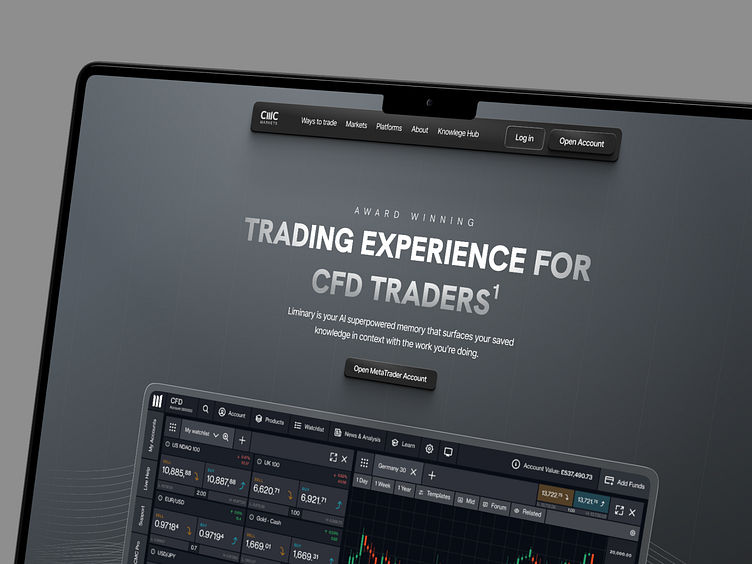
Your crypto options desk is already behind
Stop pretending this is niche. How AI is used in crypto options trading is no longer some nerdy side project; it’s becoming the default way serious traders scan, rank, and manage trades. AI tools now analyze volatility, probability, and market structure in real time, and some systems are already scoring BTC and ETH options contracts across Deribit using composite models instead of dumb signal-chasing.
The annoying part is that most traders still think AI means “buy now” or “sell now.” That’s not the move. The real edge is using AI to find where the market is mispricing risk, then letting a human decide if the trade is worth taking.
What AI actually does in crypto options trading
Look, here’s the thing: crypto options are messy. You’re dealing with volatility, skew, term structure, open interest, funding pressure, and a market that never shuts up. AI helps by processing that mess faster than you can, and it can do it 24/7 without getting tired or emotional.
In practice, AI in crypto options trading is used for four jobs. It screens contracts, models volatility, estimates probability, and watches risk while you sleep.
It’s not magic. It’s pattern recognition at stupid speed.
The real workflows traders use
Honestly? This is where people mess up. They ask AI to predict the future, then act shocked when it gives them garbage. The better use is narrower and way more useful.
AI can build volatility maps for different expirations, which helps you spot overpriced and underpriced options. It can also model Greeks over time instead of giving you one frozen snapshot, which matters because delta and gamma don’t sit still in crypto.
Here’s another good one: event risk analysis. If a macro announcement, ETF headline, or protocol drama is coming, AI can compare implied volatility against historical moves and flag whether the market is overreacting or asleep at the wheel.
Then there’s what-if simulation. That means scenario testing, Monte Carlo paths, breakeven overlays, and tail-risk checks before you put real money on the table. That’s the part most traders skip right before they get clipped.
AI vs human judgment in crypto options
Your brain is still the CEO. AI is the analyst who works all night and never asks for a promotion.
Here’s the practical split: AI is better at scanning thousands of strikes, expirations, and volatility patterns without getting bored. You’re better at deciding whether the market context actually supports the trade, whether the catalyst is real, and whether the position fits your risk limits.
| Approach | What it’s good at | What it sucks at | Real talk |
|---|---|---|---|
| AI-assisted trader | Fast screening, volatility ranking, scenario testing | False confidence, overfitting, bad data | Worth it if you already know options |
| Fully manual trader | Judgment, context, discretion | Slow, inconsistent, emotionally messy | Fine for small size, painful at scale |
| Fully autonomous bot | 24/7 execution, routine management | Can spiral if the model is wrong | I’d trust this only with hard guardrails |
The catch is simple. If you let AI place trades with no human oversight, you’re not “innovative.” You’re just automating your mistakes.
What AI bots are doing under the hood
Here’s what nobody talks about: most AI crypto bots aren’t “thinking” like a human. They’re pulling market data through APIs, reading order flow, checking volatility, and then ranking setups based on rules or learned probability models.
Some newer systems go further. They can generate strategies in plain English, backtest them, and then run them live on an exchange. That’s cool, but don’t get seduced by the demo. A slick interface doesn’t mean the model won’t blow up in a high-vol regime.
A real bot usually watches spot price, options chain data, implied volatility, open interest, and sometimes sentiment or on-chain activity. Then it decides whether the edge is in buying calls, selling premium, hedging, or doing nothing, which is honestly the hardest trade of all.
Where AI actually helps most
Real talk: AI doesn’t help everywhere equally. It shines in a few ugly, repetitive jobs that humans hate doing.
The biggest win is options screening. If you’re staring at dozens of BTC and ETH strikes across multiple expirations, AI can rank the contracts with the best statistical setup much faster than you can. That’s especially useful when volatility is shifting and you need to know what’s cheap, what’s expensive, and what’s just noise.
It also helps with risk monitoring. AI can flag when correlations break, gamma risk starts creeping up, or implied volatility gets weird before the crowd notices. That matters because crypto can go from calm to insane in a single session, and options traders get hurt in the gap.
Then there’s journaling and post-trade analysis. AI can tell you which setups actually made money, which ones only looked smart, and which ones were just lucky in disguise. That’s not glamorous, but it’s how you stop repeating dumb mistakes.
The big risks nobody wants to say out loud
Yeah, this is the part the marketing pages soften. I’m not going to.
First, overfitting is brutal. A model can look amazing on historical crypto data and then faceplant the second market conditions change. That’s especially ugly in crypto because regime shifts happen fast and the market loves fake patterns.
Second, black box behavior is real. If you can’t explain why the model likes a trade, you’ll have a hard time trusting it when the position goes against you. You don’t need perfect math, but you do need a model you can interrogate.
Third, security and API risk matter a lot. If you connect a bot to your exchange with sloppy permissions, you’re basically handing a stranger your keys and hoping for the best. That’s not sophisticated. That’s lazy.
And fourth, autonomy can get dangerous fast. AI should help with sizing ideas, risk warnings, and scenario work, but letting it manage everything without guardrails is how people turn a good month into a disaster.
Best use cases by trader type
The trap most teams fall into is trying to use the same AI setup for everyone. That’s nonsense. A solo trader, a market maker, and a prop desk don’t need the same thing.
If you’re a solo trader, AI should help you research, scan, and journal. You need speed and discipline, not a robot with delusions of grandeur.
If you’re running a small desk, AI is best for volatility analytics, alerting, and trade ranking. That’s where it saves the most time without taking over the whole process.
If you’re on a professional desk, AI becomes part of the pipeline. It can support pricing, hedging, skew analysis, and portfolio risk checks, but it still needs human oversight and hard controls.
What a sane AI workflow looks like
Honestly, this is the part you should copy if you’re serious. Keep it boring and controlled.
Start with data collection from exchange APIs and market feeds. Then use AI to rank strikes, surface volatility anomalies, and run scenario checks before any trade gets placed.
After that, keep a human in the loop for approval. That human should decide whether the trade fits your thesis, your portfolio, and your downside tolerance. If the model can’t explain itself well enough for you to say yes or no, it’s not ready.
Then review the trade after it closes. AI can compare the outcome against the original setup and flag whether the edge was real or just luck. That’s how you turn AI from a flashy toy into an actual process.
How to think about tools in this space
Let’s be blunt. Not every “AI crypto trading” product is worth your time. Some are real systems that model volatility, backtest strategies, and help with execution. Others are just repackaged signal spam with a shiny dashboard.
If you want something useful, look for tools that do three things well. They should analyze options data, explain the reasoning, and let you test ideas before risking capital.
If a product promises guaranteed wins, run. If it hides behind “proprietary AI” and won’t show how decisions are made, run faster. Crypto options are hard enough without paying for mystery meat.
Where this is heading next
Your competitors are already testing this. Some are using AI to rank options in real time, others are building plain-English strategy engines, and a few are moving toward autonomous agents that can observe, decide, and act without a human typing every move.
That doesn’t mean humans are obsolete. It means the boring part of options trading is getting automated, while judgment, risk control, and strategy design are becoming more valuable.
The smartest traders aren’t asking, “Can AI trade for me?” They’re asking, “Which parts of my process are stupidly manual, and how fast can I remove them?” That’s the real game.
Real talk: how AI is used in crypto options trading only works if you treat it like a sharp tool, not a religion. Most people won’t do that, which is exactly why the edge is still there.
What part of your current workflow is still way too manual?
You may also like
- Best Multimodal AI Tools for Content Creators in 2026: The Ultimate Guide
- Why AI Startups Are Getting Funded Faster Than Ever in 2026
- How to Optimize Cloud Costs for AI-Driven SaaS Apps in 2025
- AI Infrastructure Trends Every Developer Should Know in 2026
- AI Workflows That Replace Entire Departments: The 2026 Blueprint for Lean Operations