

- Published on
How Autonomous AI Coding Assistants Are Changing Software Development in 2026
Listen to the full article:
- Authors

- Name
- Jagadish V Gaikwad
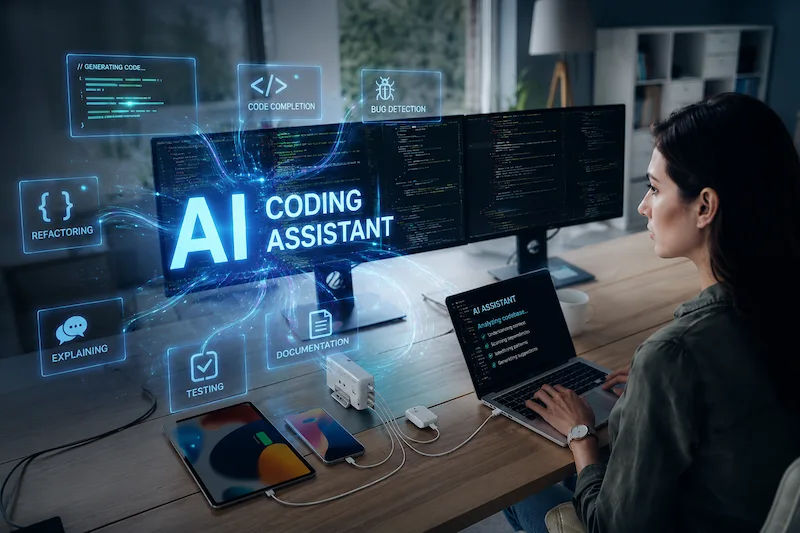
The landscape of software development has fundamentally shifted in 2026, moving from simple code suggestions to autonomous AI coding assistants that act as collaborative partners, capable of understanding entire architectures and shipping safer code. We are no longer just talking about tools that help you write a function faster; we are witnessing the rise of systems that internalize deployment principles, manage multi-file refactoring, and prevent risky changes before they reach production. This evolution represents a maturation from the "vibe coding" era of 2025 to a demand for architectural understanding and deployment-aware intelligence.
According to the Pragmatic Engineer survey, 95% of developers now use AI tools at least weekly, and a staggering 56% perform 70% or more of their engineering work with AI . This isn't just a trend; it's the new primary interface through which we reason about and shape our code . The journey from 2025 to 2026 is a story of moving from standalone chat bots to deeply integrated development environments that care about how code reaches production .
From Autocomplete to Autonomous Agents
The most critical change in 2026 is the transition from autocompletion to autonomous agentic capabilities . In the past, an AI assistant would suggest the next line of code, leaving the developer to decide if it was correct. Today, AI coding agents take action: they create files, write code, run tests, and build entire features autonomously .
Unlike traditional assistants that merely suggest code, agents execute tasks. You describe what you want, and the agent builds it, creating files, writing code, running commands, and iterating until the job is done . You watch it work, rather than just typing alongside it. This shift means that the best results come from humans guiding AI agents, focusing on architecture and design while the AI handles the boilerplate and routine coding .
The tools leading this pack—Cursor, Claude Code, GitHub Copilot Workspace, Windsurf, Sourcegraph Cody, and Tabnine—each represent a different, valid vision of this future . They are no longer just assistants; they are becoming collaborative partners and systems of intelligence . Crucially, the most advanced AI assistants now internalize the principles of DORA (DevOps Research and Assessment) and Progressive Delivery .
The Top Players in 2026
Selecting the right tool involves assessing your infrastructure, security requirements, and team skills . However, the market has clearly defined front-runners for 2026.
Claude Code leads on code quality and is the most-used AI coding tool for reasoning and complex multi-file refactoring . It excels when you need deep logic and architectural coherence.
Cursor is the best AI IDE, excelling at deep codebase understanding and daily coding workflows . Its "Composer" feature offers powerful multi-file editing, making it ideal for general software development .
GitHub Copilot remains the enterprise default, particularly in its Agent Mode, which works seamlessly from issues and PRs . It is the go-to for teams already embedded in the GitHub ecosystem.
Windsurf and Tabnine are also defining the landscape, offering unique strengths in workflow integration and security .
Here is a quick comparison of the top tools based on their primary strengths:
| Tool | Primary Strength | Best Use Case | Pricing Model (Approx) |
|---|---|---|---|
| Claude Code | Code Quality & Reasoning | Complex multi-file refactoring | $20/month |
| Cursor | Deep Codebase Understanding | Daily coding & IDE integration | $20/month |
| GitHub Copilot | Enterprise Integration | PRs, Issues, & Enterprise workflows | $10-20/month |
| Devin | Maximum Autonomy | Enterprise-grade feature building | $500/month |
| Playcode Agent | Web Development | Building websites from plain English | $9.99/month |
Note: Pricing varies by region; US market rates shown.
Sustained Velocity with Minimal Disruption
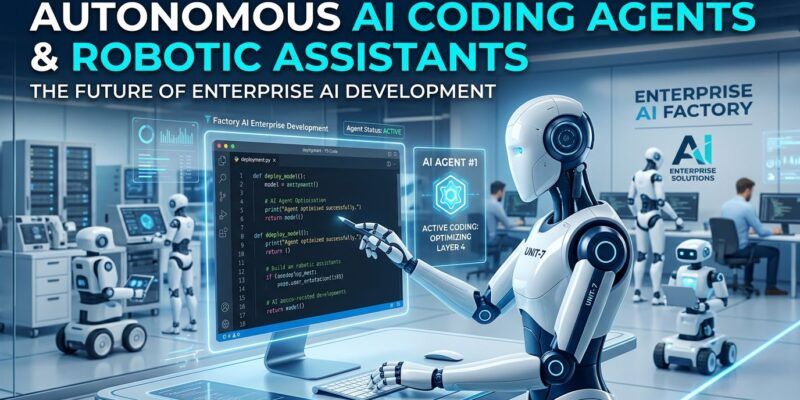
The ultimate goal of these autonomous assistants is not just velocity; it is sustained velocity with minimal disruption . The best tools don't just help us code faster; they actively help us ship safer and prevent risky changes .
This is where the integration of DORA metrics and Progressive Delivery becomes critical. Advanced assistants now understand the implications of a code change on production stability. They can run tests, iterate on failures, and ensure that the code they generate meets quality standards before a human even reviews it. This capability prevents the "risky changes" that often plague rapid development cycles.
For example, Devin is cited as the most autonomous agent, capable of building entire features, but its high cost ($500/month) makes it primarily an enterprise solution . On the other end, Playcode Agent offers a budget-friendly option ($9.99/month) specifically for web development, allowing users to describe a website and watch it build autonomously with full code ownership .
The distinction between AI coding assistants (like Cursor, Copilot, Claude) and AI app builders (like Lovable, Bolt) is also vital . Assistants help you write code while you stay in control, whereas app builders generate full applications from a prompt. In 2026, the industry is leaning heavily toward assistants that empower developers to maintain architectural control while leveraging AI for speed.
The Human-AI Collaboration Model
A common misconception is that AI agents will replace developers. The reality is that AI agents are tools that make developers more productive . They handle the boilerplate and routine coding, letting humans focus on architecture, design, and complex problem-solving .
The best results come from humans guiding AI agents. You define the "what" and the "why," and the agent handles the "how." This partnership allows for a level of productivity that was previously impossible. For instance, Cursor Composer allows for powerful multi-file editing, enabling a developer to refactor an entire module in minutes rather than hours .
Furthermore, these tools are widely adopted and praised for their strengths in productivity, intelligence, and workflow integration . Runner-ups like RooCode, Windsurf, and Aider are also gaining traction, while emerging tools like AWS Kiro and Kilo Code are on the horizon .
Security and Code Ownership
When selecting an AI coding assistant, security requirements and code ownership are paramount . Some tools may lock you into their ecosystem, while others like Playcode and Cursor let you export everything .
For enterprise environments, GitHub Copilot is often the default due to its robust security features and integration with existing compliance workflows . However, for teams prioritizing open-source flexibility, OpenCode is the top option .
The ability to internalize DORA principles also means that these tools are better at preventing security vulnerabilities. By running tests and iterating on code, they can catch potential issues that a human might miss in a rush. This proactive approach to security is a key differentiator in 2026.
The Future of Software Development
The future of software development is one where autonomous AI coding assistants are the primary interface for shaping code . We are moving toward a world where developers act as architects and directors, while AI agents execute the detailed work.
This shift is not just about speed; it's about quality and stability. The tools leading the pack are those that can balance velocity with safety, ensuring that code reaches production without disruption. As 95% of developers now use AI weekly, the industry is adapting to a new standard where AI is not an optional add-on but a core component of the development lifecycle .
The journey from 2025 to 2026 has been a story of maturation, from simple autocomplete to architectural understanding and deployment-aware partners . The tools of 2026 are no longer just assistants; they are collaborative partners that help us ship safer and prevent risky changes .
Conclusion
Autonomous AI coding assistants are fundamentally changing software development by shifting the developer's role from coder to architect. With tools like Claude Code, Cursor, and GitHub Copilot leading the way, the industry is seeing a massive increase in productivity, with 56% of developers doing 70% or more of their work with AI . The focus has moved from simple velocity to sustained velocity with minimal disruption, ensuring that code is not just fast, but also safe and stable .
As we look forward, the integration of DORA principles and Progressive Delivery will continue to define the best tools, making them essential for any serious development team. The future is a collaborative partnership between human intuition and AI execution.
What's your experience with autonomous AI coding assistants? Are you using Cursor, Claude, or Copilot for your daily work, and how has it changed your development velocity? Share your thoughts in the comments below!
Try Free | Official Website | Learn More
You may also like
- How AI SaaS Tools Improve Contract Management: Speed, Accuracy, and Insights
- Voice AI SaaS Tools for Customer Support Teams: How to Pick, Deploy, and Measure Success
- Deploying a SaaS Product on AWS: A Comprehensive Guide
- AI Automation Tools Every Marketing Agency Should Use in 2025
- How AI is Used in Cloud Cost Management: Smarter Spending in 2025