

- Published on
AI-Powered DeFi Credit Scoring: How It Works, Benefits, and Risks
Listen to the full article:
- Authors

- Name
- Jagadish V Gaikwad

Decentralized finance, or DeFi, lending usually protects lenders through overcollateralization. A borrower deposits assets worth more than the loan, while smart contracts monitor collateral and liquidate positions when their value falls too far. This model reduces some forms of credit risk, but it also excludes borrowers who do not have enough capital to lock up.
AI-powered DeFi credit scoring aims to change that by evaluating wallet behavior and other permitted data before setting loan terms. A model might assess repayment history, liquidity management, protocol activity, transaction patterns, liquidations, and links to known risky addresses. The resulting score could influence interest rates, collateral requirements, borrowing limits, or access to particular pools.
The idea is promising, but an AI score is not proof that a borrower will repay. DeFi data can be incomplete, manipulated, and difficult to connect to a real-world identity. The strongest systems should therefore treat scoring as one risk-control layer rather than a replacement for collateral, audits, governance, and conservative loan design.
What AI-powered DeFi credit scoring means
Traditional credit scoring estimates whether a person or business is likely to repay based on historical financial information. DeFi credit scoring applies a similar concept to blockchain activity, often using a wallet address as the starting point.
A scoring system can combine:
- Repayment history across lending protocols
- Borrowing duration and outstanding debt
- Liquidation events
- Collateral quality and concentration
- Wallet age and transaction continuity
- Liquidity provision and staking activity
- Transfers involving sanctioned, hacked, or high-risk addresses
- Stablecoin usage and cash-flow patterns
- Relationships among wallets and protocols
Machine learning is the component that identifies patterns in this data. Depending on the design, it may classify wallets into risk categories, estimate the likelihood of repayment, detect unusual behavior, or continuously update a borrower profile.
Blockchain contributes a different capability: a shared record of transactions that can be independently verified. A 2022 study describing the BACS system combined blockchain-based data management with automated machine learning, including feature selection, model construction, and evaluation. The paper presents blockchain as a way to make the data pipeline more traceable and resistant to unauthorized alteration, not as proof that every resulting score is accurate.
That distinction matters. An immutable transaction record preserves what was recorded on-chain. It does not guarantee that the data is complete, correctly interpreted, or relevant to future repayment.
How the scoring process works
A practical AI-powered DeFi credit scoring system generally has five stages.
1. Collect permitted data
The system gathers blockchain data from one or more networks. Sources may include lending markets, decentralized exchanges, staking contracts, bridges, governance systems, and token transfers.
The model should define its data boundary clearly. A score based only on public wallet activity is different from a score that also uses identity verification, bank data, employment information, or credit-bureau records. Combining these categories creates additional privacy, consent, compliance, and fairness obligations.
2. Create behavioral features
Raw transactions are rarely useful by themselves. The scoring engine converts them into features, which are measurable inputs for the model.
Examples include:
- The number of loans repaid without liquidation
- The percentage of time collateral remained above a safety threshold
- The share of assets held in volatile tokens
- The frequency of rapid deposits and withdrawals
- The age of the wallet
- The diversity of protocols used
- The amount borrowed relative to available liquidity
- The number and severity of previous liquidations
Feature design can introduce hidden assumptions. For example, frequent protocol activity might indicate experience, or it might indicate aggressive trading. A long wallet history might suggest stability, or it might simply reflect an inactive address that has never faced meaningful credit exposure.
3. Train or configure a model
A model learns from historical examples or follows rules designed by developers and risk teams. Common approaches include classification models, decision trees, random forests, gradient boosting, anomaly detection, and neural networks.
Academic work on blockchain-based credit scoring remains an emerging field. A 2024 review of blockchain, explainable artificial intelligence, and federated learning describes the area as being in its infancy, highlighting unresolved issues around broad data use, model verification, behavioral reliability, and explainability.
This means performance claims should be interpreted carefully. A model that performs well on a historical dataset may fail when market conditions change, when users move to a new chain, or when borrowers deliberately adapt their behavior.
4. Convert the output into lending terms
The model output must connect to a clearly defined lending policy. A protocol could use risk bands rather than a single score:
- Lower-risk band: larger borrowing limit or lower collateral requirement
- Middle-risk band: standard collateral and interest terms
- Higher-risk band: smaller loan, higher collateral, or manual review
- Uncertain band: no automated decision until more evidence is available
The score should not directly control money without safeguards. Protocol designers can impose maximum exposure per wallet, limit changes in borrowing terms, require additional collateral during volatility, and pause new loans if data feeds become unreliable.
5. Monitor changes over time
Creditworthiness is not static. A wallet can take on new debt, suffer a liquidation, move assets through a bridge, or become linked to a compromised address.
Continuous monitoring can therefore be more useful than a one-time score. However, constant rescoring also creates risks. A sudden model change could reduce a borrower’s access to liquidity, trigger collateral demands, or create forced selling during a market downturn. Borrowers need notice, understandable explanations, and a way to challenge incorrect data.
What makes DeFi scoring different from traditional credit scoring?
The largest difference is the data environment. Traditional credit files usually connect records to a legal identity and include information such as repayment accounts, outstanding balances, and formal lender reports. DeFi scoring often begins with pseudonymous addresses and public transaction histories.
That creates both advantages and weaknesses.
| Criterion | Traditional credit scoring | AI-powered DeFi credit scoring |
|---|---|---|
| Primary identity | Usually linked to a verified person or business | Often linked first to a wallet address |
| Main data source | Credit accounts and reported financial obligations | Blockchain transactions and protocol interactions |
| Update speed | Often periodic | Potentially near real time |
| Data visibility | Restricted by institutions and privacy rules | Much activity may be publicly observable |
| Main blind spot | Limited view of informal or cross-border behavior | One person may control many wallets, or many people may share one |
| Typical protection | Regulation, dispute processes, and lender controls | Smart contracts, oracle design, governance, and protocol controls |
The table shows why public data is not automatically reliable identity data. A wallet may be transferred, shared, delegated, or controlled through a contract. A borrower may also separate activity across several addresses to avoid detection or protect privacy.
Potential benefits
More flexible collateral requirements
Overcollateralized lending is simple to automate, but it is capital intensive. A credible risk score could help protocols offer smaller collateral discounts to borrowers with consistent repayment behavior.
This does not eliminate risk. It changes where the risk is managed: from a large upfront collateral buffer toward borrower assessment, monitoring, reserve design, and loss absorption.
Faster underwriting
Smart contracts can use a score to apply predefined terms without a lengthy manual review. This may be useful for small loans where traditional underwriting is too expensive.
The process is only genuinely automated if the data sources, model outputs, and policy rules are available and auditable. A label such as “AI-powered” does not reveal whether the system uses a transparent model or an opaque vendor service.
Broader use of on-chain history
A borrower with limited traditional credit history may still have years of verifiable protocol activity. On-chain behavior could provide useful evidence when it is sufficiently long, authentic, and relevant to the loan.
That evidence should be treated as supplementary rather than universally equivalent to an income statement or verified liability record.
Adaptive risk management
A model can watch for changes that static collateral ratios may miss. Rising concentration, repeated liquidations, unusual transfers, or correlated exposure across protocols may justify smaller limits or additional safeguards.
Adaptive systems must be designed to avoid procyclical behavior. If every borrower receives stricter terms at the same time during a market decline, the model can intensify the very liquidity pressure it is meant to manage.
The main risks and limitations
Data can be manipulated
Users may create multiple wallets, move funds between linked addresses, temporarily borrow assets to appear active, or interact with low-risk protocols only long enough to influence a score. Sybil resistance, which means detecting multiple identities controlled by one actor, is difficult without stronger identity signals.
Models can reproduce unfair outcomes
Machine learning reflects its training data and design choices. If historical data overrepresents certain chains, assets, geographies, or transaction styles, the model may score other users less favorably without a sound connection to repayment risk.
A transparent model should document its features, validation period, error rates, exclusions, and known blind spots. Explainability should mean more than displaying a number.
Public data can still create privacy harm
A public address may reveal financial relationships, trading habits, political donations, or exposure to sensitive services. Combining multiple public datasets can make activity easier to attribute to a person, even when no single record contains a legal name.
Privacy-preserving designs may include selective disclosure, zero-knowledge proofs, data minimization, or federated learning. These techniques can reduce unnecessary exposure, but they do not automatically solve model bias or oracle risk.
Smart contracts and oracles remain attack surfaces
The scoring model may be accurate while the surrounding system fails. Price oracles can be manipulated, indexing services can go offline, contracts can contain bugs, and governance can change risk parameters unexpectedly.
A borrower’s score should never be treated as independent of the protocol that enforces the loan. The full risk assessment includes contracts, collateral assets, liquidation mechanisms, oracle assumptions, administrative keys, and upgrade procedures.
False precision encourages bad decisions
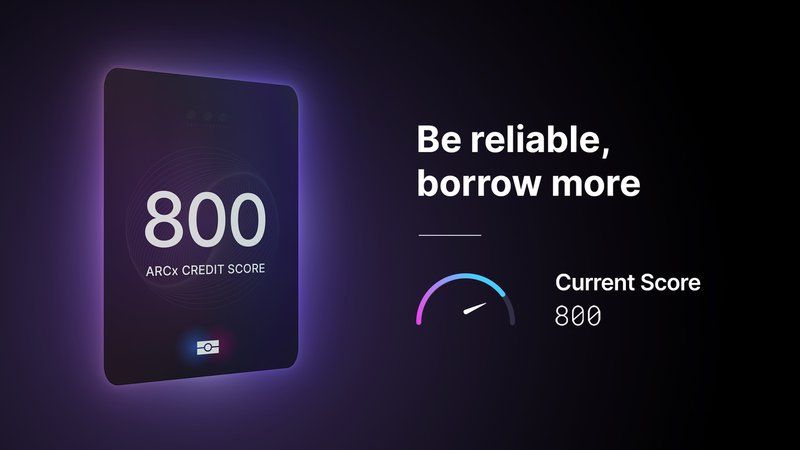
A score presented as a precise number can imply more certainty than the evidence supports. A wallet rated 742 is not necessarily meaningfully safer than one rated 739 unless the protocol can demonstrate that the difference changes observed repayment outcomes.
Risk bands, confidence ranges, reason codes, and explicit “insufficient data” states are often more honest than a highly granular ranking.
Regulation may apply
The legal treatment of automated credit decisions, crypto lending, identity data, and financial promotions varies by jurisdiction and business model. A protocol that offers loans to identifiable consumers may face obligations that differ from those affecting a permissionless software interface.
Legal review should occur before deployment, especially where the system uses personal data, makes decisions about access to credit, or markets itself as a substitute for regulated underwriting.
How to evaluate a DeFi credit scoring system
Borrowers, lenders, and protocol teams can use the following checklist.
Ask what data the model uses
Is the score based only on on-chain activity? Does it include off-chain identity or financial data? Are users informed about collection, retention, and sharing?
Check whether the score is explainable
A credible system should provide major contributing factors, the time window used, missing-data treatment, and a method for correcting inaccurate attribution.
Separate model quality from protocol quality
Ask for evidence about both. Model metrics such as precision, recall, and calibration describe prediction performance on a dataset. They do not prove that the smart contracts, liquidation engine, or price feeds are secure.
Look for out-of-sample testing
A model should be tested on data it did not use during training. Stronger evaluation also covers different market regimes, chains, asset types, and wallet behaviors.
Examine governance and failure handling
Important questions include:
- Who can change the model?
- Can administrators override scores?
- What happens when the data feed stops updating?
- Are old scores retained for auditability?
- Can borrowers appeal an incorrect score?
- Are losses covered by reserves, insurance, or lenders?
Avoid unsupported performance claims
A research prototype, a vendor dashboard, and a production lending protocol are not equivalent. The BACS research demonstrates a technical approach to blockchain and automated machine learning, but it does not establish that a specific DeFi protocol can safely offer undercollateralized loans.

A safer implementation pattern
A conservative deployment can begin with scoring as an advisory signal. The protocol might use it to prioritize review, adjust loan size within narrow limits, or offer modest fee differences while retaining meaningful collateral.
Next, the team can test the system in a controlled environment using historical data and simulated stress scenarios. The test should include wallet fragmentation, oracle outages, chain congestion, volatile collateral, and correlated defaults.
Only after validation should automated terms expand. Even then, exposure limits, circuit breakers, reserve requirements, independent security reviews, and transparent governance remain necessary.
A useful design principle is to make uncertainty actionable. If the model lacks enough data, the protocol should not force a favorable or unfavorable decision. It can request additional verification, keep standard collateral terms, or decline the loan without pretending to know more than it does.
Conclusion
AI-powered DeFi credit scoring could make lending more flexible by using verifiable blockchain behavior to supplement collateral-based risk controls. Its strongest potential lies in continuous monitoring, faster underwriting, and more tailored loan terms.
The technology does not solve the fundamental problems of identity, data quality, manipulation, privacy, smart-contract security, or market volatility. Academic research identifies blockchain and explainable AI as promising but still developing approaches, while practical risk frameworks emphasize the need for reliable on-chain credit histories and careful lending controls.
The most defensible path is gradual: use transparent features, publish limitations, test across changing market conditions, preserve borrower recourse, and treat the score as evidence rather than certainty. In DeFi, better credit assessment can reduce dependence on blanket overcollateralization, but only when model risk is managed as seriously as borrower risk.